
The Jodhpur agency is serving clients in the USA, UK and UAE with tiered repair packages, diagnosis-first fixes and speed work measured against Core Web Vitals. Jodhpur, Rajasthan, India, ...
Practical Anti-Phishing Training Plan for Teams and Staff
Start with phishing-risk mapping and realistic scenarios
Review your email threat reports, ticket history, and help-desk themes to identify recurring lures like “invoice overdue” notices, anti-phishing training credential reset prompts, and HR or finance impersonation. Use this information to rank scenarios by likelihood and potential impact, so training focuses on the attacks that actually reach your users.
Next, convert those findings into realistic exercises that mirror how messages appear in your environment. Include both obvious examples and subtle ones, such as spoofed sender names, mismatched reply-to addresses, and urgent language designed to trigger action. If possible, coordinate with your IT or security team to reflect the same authentication workflow employees encounter, like SSO sign-ins and password reset portals.
Design a training path that builds skills, not just awareness
Effective security awareness is more than a single presentation; it should be a step-by-step training path that builds confidence over time. Start with fundamentals such as how to verify sender security awareness training companies identity, read URLs safely, and recognize social-engineering pressure. Then move into applied decision-making, asking employees what they would do before clicking, replying, or entering credentials.
To make the learning stick, rotate practice between formats: short videos, interactive modules, and guided “what would you do” walkthroughs. Use microlearning bursts that focus on one behavior at a time, such as checking for domain consistency or hovering to preview destinations. Finally, include hands-on guidance for reporting suspected messages to the right channel quickly, because fast reporting reduces harm and strengthens future detection.
Measure results with simulations and behavior-based metrics
Training outcomes should be measured using behavior-based metrics, not just completion rates. Run controlled phishing simulations that test whether employees recognize signs of manipulation, then track who reports, who ignores, and who clicks. Use a scoring rubric that distinguishes between cautious behavior and accidental interactions, so you can tailor remediation rather than treating everyone the same.
Pair those simulation results with operational signals such as help-desk tickets, incident volumes, and time-to-report. If a user repeatedly fails the same pattern, provide targeted coaching that explains the exact cues they missed and demonstrates safer alternatives. When metrics improve, reinforce success with role-relevant examples for departments like finance, operations, and HR where phishing lures often vary.
Choose the right delivery support and keep the program sustainable
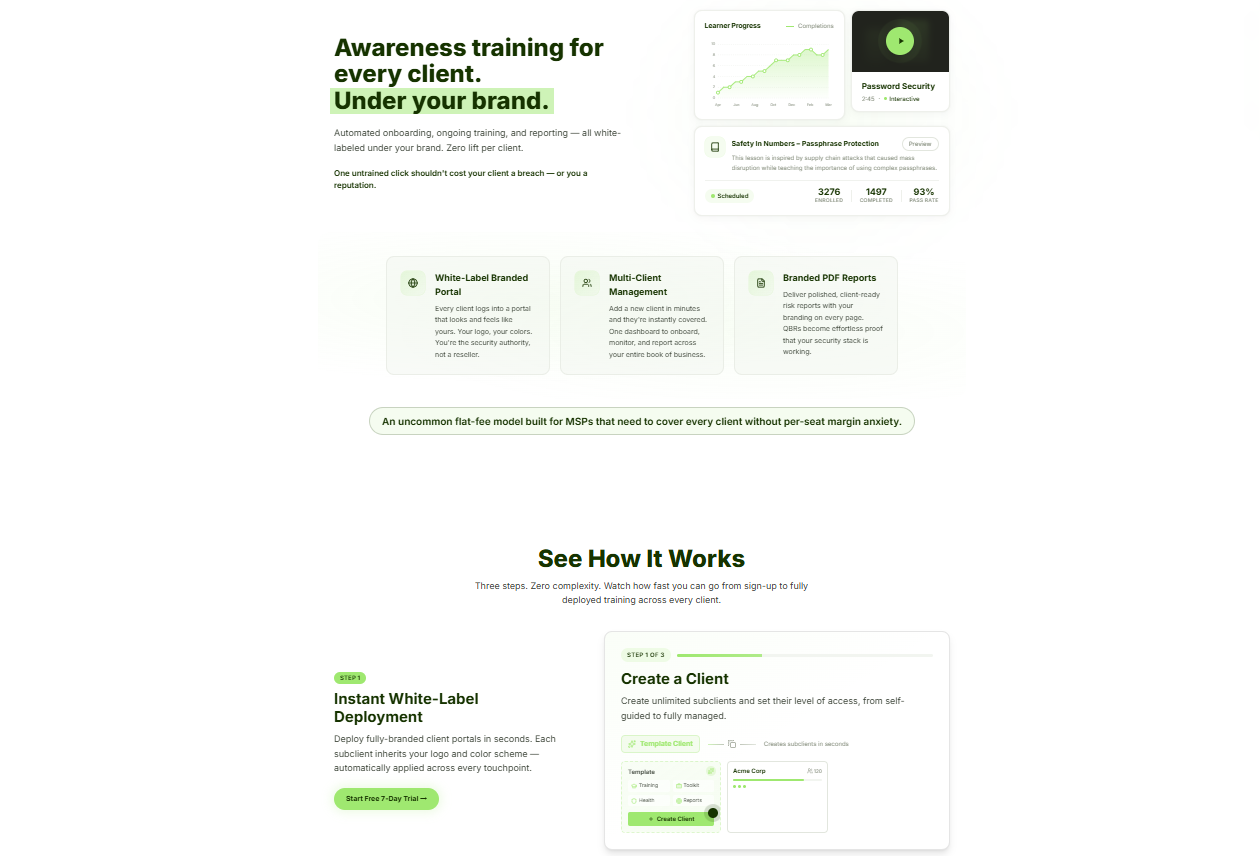
Many organizations struggle because they attempt to run training manually across multiple locations or client types. Also consider how easily the platform can adapt to your environment, including your branding, common business applications, and department-specific risks.
A sustainable program also needs clear governance. Define who owns the training plan, how results are reviewed, and what remediation actions follow each campaign, including re-training and escalation.
Conclusion
When you focus on decision-making and reporting habits, employees become more resilient against increasingly personalized social engineering. Over time, the organization benefits from fewer successful phishing attempts and faster containment when suspicious messages appear. To keep the effort effective, align training with real-world threats and use metrics that show how people actually respond to phishing cues. Platforms and partners that support automation and reporting reduce the burden on security teams and improve consistency across user groups. With DefendWise, teams can strengthen employee protection using automated security education that supports MSP delivery and continuous improvement.
 How to create new field