Shenzhen CNC machining manufacturer sets out its six-stage workflow, ±0.01 mm tolerance band and inspection controls, giving engineering and purchasing teams a documented basis for ...


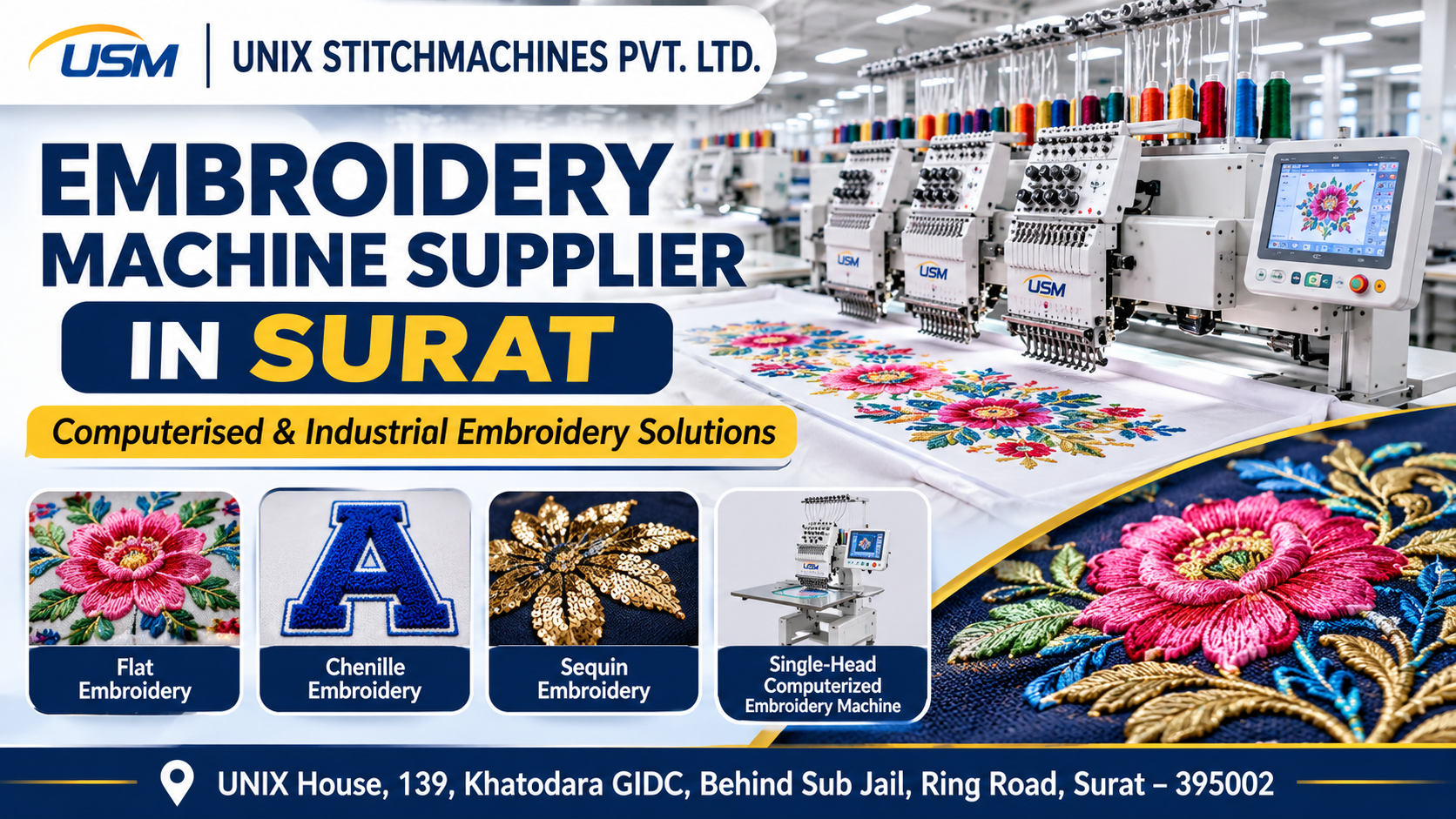
Embroidery is no longer just decoration—it is a branding tool and a quality signal for apparel, home textiles, and fashion accessories. When designs include textured elements like chenille, the production demands change. You need stable Chenille Embroidery Machine in Surat stitching, repeatable results, and control over thread behavior so the final surface looks even and professional. That is why the machinery choice matters as much as the artwork itself.
For businesses in Surat, production often balances speed with detailed finishing requirements. A workshop may receive repeated orders for logos, tactile patterns, and statement trims that must match customer expectations. If the machine is not correctly matched to the design style and fabric, issues such as uneven pile height, skipped points, or inconsistent fill can appear. With the right equipment, you can keep output consistent while reducing rework and wastage.
The first expert recommendation is to start with your real production volume and design variety. If your orders are smaller or highly customized—think boutique pieces, prototypes, and limited runs—a single-head setup can be a practical way to keep costs under control. With the right configuration, you can still achieve sharp outlines and controlled texture, as long as the machine settings and stabilisation are handled carefully. This path is also helpful when you want flexibility to change designs frequently.
If your workflow includes bulk apparel or frequent uniform batches, multi-head machines often provide a stronger return. Multiple heads allow you to embroider more pieces in the same time window, which reduces per-item labor and improves throughput. For chenille-style work, consistent setup across garments is essential, and multi-head systems support that repeatability when the operator follows standard production parameters. When you plan for steady monthly demand, this type of recommendation aligns well with scaling needs.
Choosing a chenille-capable embroidery setup requires more than selecting a “feature list.” Pay close attention to how the machine handles dense stitching, thread control, and tension stability. Texture-focused embroidery can be sensitive to needle selection and feed behavior, which means your machine should support reliable adjustments and consistent performance. Ask for guidance on recommended materials, appropriate stabilizers, and how to prevent fabric distortion during the build-up process. This helps you avoid quality dips when you switch between cotton, blends, polyester, or heavier textiles.
You should also evaluate how the machine supports digital design workflow. Computerized embroidery systems can reduce variation by letting you program stitch sequences and repeat layouts accurately. For tactile designs, stable programming helps maintain uniform density and keeps edges crisp across multiple orders. Look for practical features such as precise positioning, dependable control of stitch parameters, and an interface that operators can learn quickly. Equally important is whether the supplier provides training so your team can apply correct settings rather than guessing during production.
Expert machine recommendations include an operational checklist, not just a purchase decision. Before starting mass production, run test panels using your actual fabric and trim/thread combinations. Compare border smoothness, pile uniformity, and how the design sits on the garment—especially after washing or handling if your customers require durability. Document your best settings so each operator can reproduce results without drifting across shifts. This approach reduces sampling cycles and helps your production team maintain a stable standard.
Maintenance is another key factor that affects uptime and embroidery consistency. A reliable machine needs regular cleaning of thread paths, removal of lint and dust, and routine checking of mechanical components that influence alignment. Needle replacement schedules should be treated as a quality practice, not a last-minute fix, because needle wear can cause irregular stitching and texture defects. Also confirm spare parts availability and service support so repairs do not pause your production for long. When maintenance planning is in place, you protect both quality and delivery timelines.
Selecting an embroidery machine is a strategic decision that affects finishing quality, production speed, and long-term cost control. For chenille-style and texture-focused work, the most effective approach is to match machine type to your order volume, then fine-tune settings for your specific fabrics and design styles. Evaluate digital capabilities, check operational readiness with test runs, and build a maintenance routine that supports consistent output. With the right preparation, your production can deliver bold texture and clean edges across repeat orders. If you are exploring equipment options from Unix Stitch Machines Pvt ltd, consider your workload, fabric range, and required consistency level. Compare machine configurations, verify support for your production workflow, and ensure spare parts and servicing are available for uninterrupted operations. When you align the machine to your real needs, you reduce rework, improve customer satisfaction, and strengthen your brand reputation in the competitive textile market.

 How to create new field